
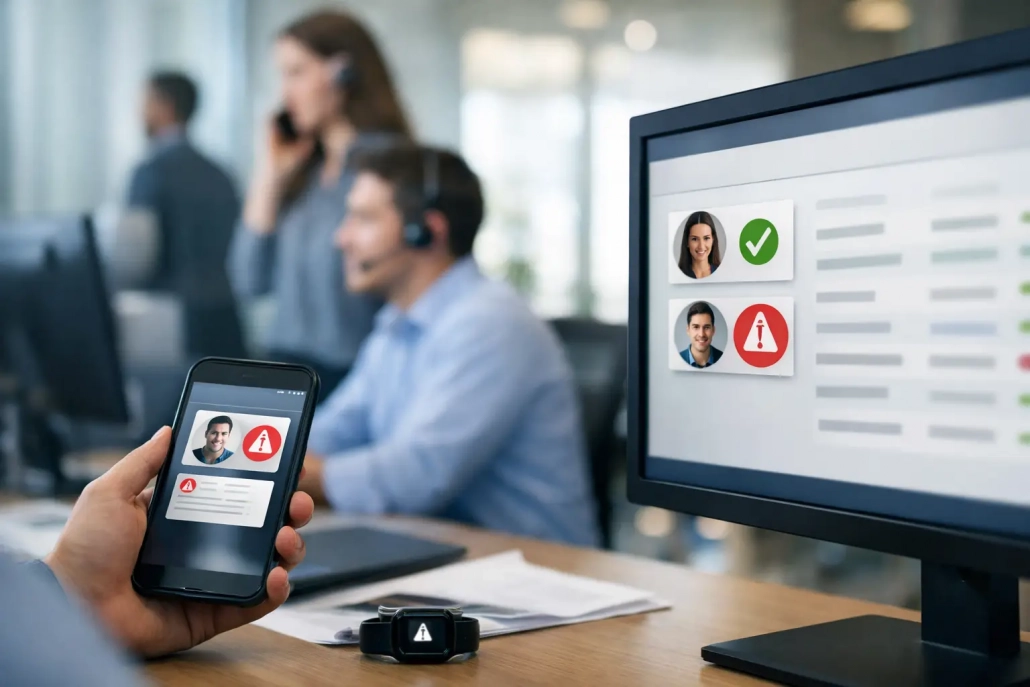
Why Real Time Attendance Alerts Matter
At 9:07 a.m., a front office can already be behind. A bus arrives late, a parent calls about an absence, three students check in after first period, and a teacher notices an empty seat that should not be empty. This is exactly where real time attendance alerts change school operations. Instead of waiting for someone to reconcile paper notes, emails, and SIS updates hours later, staff can see attendance events as they happen and act while the school day is still moving.
For K-12 schools, attendance is not just a reporting function. It is a student accountability function, a parent communication function, and in many cases a school safety function. If a student misses class, arrives late, leaves campus, or appears where they should not be, the timing of that information matters. A delayed attendance record can create unnecessary confusion. A real-time alert can create clarity in minutes.
What real time attendance alerts actually do
At the most practical level, real time attendance alerts notify the right people when a defined attendance event occurs. That event might be a student marked absent in first period, a tardy threshold being reached, an unverified check-in, an early dismissal, or a missed class transition. The alert can go to office staff, attendance teams, deans, school safety personnel, teachers, or families, depending on the school’s workflow.
That sounds simple, but the operational value is significant. The difference between a batch attendance process and a real-time process is the difference between finding out at 2:30 p.m. that a student was unaccounted for all day and finding out at 8:18 a.m. that the student never made it to class. Schools do not need more data sitting in reports. They need information that triggers action.
The best systems do more than send a message. They connect attendance capture, student movement, notifications, and reporting in one workflow. That matters because disconnected tools create duplicate work. A school may already have a student information system, but if attendance events are delayed, manually entered, or trapped in separate systems, staff still spend too much time chasing answers.
Why schools are moving toward real time attendance alerts
Most schools do not adopt new attendance processes because they want more software. They adopt them because the current process is creating friction. Teachers take attendance one way, the front office confirms absences another way, and administrators pull reports later to figure out what happened. By then, the school has lost time it cannot recover.
Real time attendance alerts solve a timing problem and a visibility problem at the same time. They help schools respond faster to routine issues such as tardies and parent notifications, but they also improve campus accountability. If a student is expected in class and is not there, staff can investigate quickly. If a student checks in through a kiosk, barcode scan, mobile device, or classroom scanner, the school has an immediate digital record instead of a paper trail that may or may not be complete.
For districts, the value scales beyond one building. Attendance teams can standardize rules, automate notifications, and create more consistent practices across elementary, middle, and high school campuses. That does not mean every school must operate the same way. It means the district can support local flexibility without losing oversight.
The operational impact on school teams
Front office and attendance staff
These teams usually feel the burden first when attendance processes are slow. They field parent calls, manage late arrivals, verify absences, update records, and answer questions from administrators. Real-time alerts reduce the lag between event and response. Instead of manually sorting through sign-in sheets and teacher emails, staff can work from current attendance activity.
That improves accuracy, but it also reduces avoidable interruptions. When a school can automatically flag unexcused absences or notify families as soon as a student is marked absent, staff spend less time making repetitive calls and more time resolving exceptions.
School administrators and deans
For assistant principals, deans, and operations leaders, attendance is a behavior and accountability issue as much as an administrative one. Patterns matter. Students who are repeatedly tardy, skipping specific periods, or moving outside approved locations often need intervention before the issue grows.
Real-time alerts make those patterns visible earlier. A dean does not need to wait for end-of-week reports to know a student missed third period again. The school can intervene that day. That is better for discipline, better for family communication, and better for student support.
Safety and campus supervision teams
This is where timing becomes especially important. Schools are responsible for knowing who is on campus and where students are expected to be during the day. Attendance data, check-ins, hall pass activity, and campus movement all contribute to that picture.
A real-time alert does not replace a school safety plan, but it strengthens one. If a student is absent from class with no verified explanation, or if a check-in pattern raises concern, staff can respond while the issue is still current. That is a meaningful difference from discovering a discrepancy long after the fact.
What to look for in a real time attendance alerts system
Not all alerting tools are built for school operations. Some can send notifications, but they do not fit the speed, complexity, or accountability demands of a K-12 campus. Schools should look beyond the alert itself and evaluate how the system fits the daily workflow.
First, attendance capture needs to be fast and flexible. A school may use barcode scanning, classroom-based tools, front office kiosks, mobile check-ins, or multiple methods at once. If attendance entry is cumbersome, alerting will not solve the underlying problem.
Second, the system should support role-based notifications. A teacher, attendance clerk, parent, and dean do not all need the same message. Schools need control over who gets alerted, when they get alerted, and what event triggers the notice.
Third, SIS integration matters. If attendance data lives outside the district’s reporting environment, staff will still be reconciling records by hand. The strongest approach is an all-in-one workflow where attendance capture, notifications, and reporting stay connected.
Fourth, schools should ask about implementation flexibility. An elementary campus, a large urban high school, and a rural district with limited staffing may need different deployment models. A best-in-class solution should adapt to the school, not force the school into a rigid process.
The trade-offs schools should consider
Real-time systems are powerful, but schools still need thoughtful setup. Too many alerts can create fatigue. Too few alerts can leave important issues hidden. The answer is not simply turning every event into a notification. The answer is configuring the system around actual operational priorities.
There is also a change-management piece. Staff need clear expectations about attendance entry, exception handling, and follow-up. Technology improves the process, but only if the school defines the process well. That is why implementation support matters as much as software features.
For district leaders, another trade-off is centralization versus campus autonomy. Standardized rules improve consistency, but schools often need local flexibility for tardy thresholds, attendance windows, and communication protocols. The right platform should support both.
Why this matters beyond compliance
Schools are under pressure to improve attendance outcomes, document interventions, communicate with families, and maintain a safe environment without adding administrative weight. Real time attendance alerts help because they turn attendance from a delayed record into an active operational tool.
That shift has measurable value. It can reduce tardy lines, speed up parent outreach, improve documentation, and help staff address concerns before they become bigger problems. It also builds confidence. Teachers know attendance issues are being seen. Parents receive timely communication. Administrators gain a clearer picture of what is happening across campus.
For schools and districts evaluating attendance technology, the real question is not whether alerts are useful. The real question is whether the alerting process is connected to the rest of the school day. When attendance, accountability, and communication work together, schools operate with more control and less guesswork. That is why platforms such as SwipeK12 continue to gain traction with K-12 leaders who need tools that perform in real conditions.
The schools that get the most value from real-time attendance are usually not the ones chasing more dashboards. They are the ones building a faster, clearer response to what students and staff are experiencing right now.


Leave a Reply
Want to join the discussion?Feel free to contribute!