
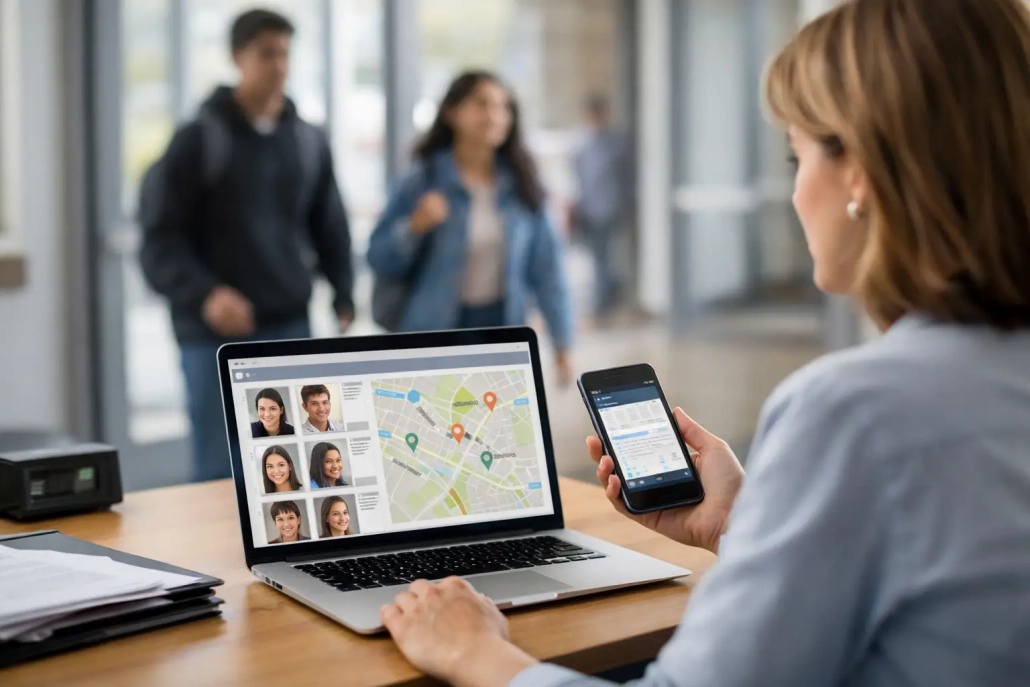
How to Track Student Tardiness in Real Time
A student arriving eight minutes late may seem like a small issue. Multiply that delay across first period, hundreds of students, and an entire school year, and it becomes lost instructional time, missed meals, supervision gaps, and a pattern that is harder to address after the fact. Knowing how to track student tardiness accurately gives school leaders the timely information they need to respond before a routine becomes chronic absenteeism or a campus accountability concern.
The goal is not to create more paperwork for teachers or turn every late arrival into a disciplinary event. The goal is a consistent, real-time process that records when students arrive, identifies why they are late, alerts the right staff, and supports appropriate follow-up with students and families.
Start With a Clear, Consistent Definition of Tardy
Reliable data begins with a definition staff can apply the same way in every classroom and building. A district may define tardiness as arriving after the bell, while a school with large campuses may allow a brief passing-period grace window. Neither approach is automatically right. What matters is that the rule reflects the school schedule, transportation realities, and expectations communicated to students and families.
Set specific tardy codes rather than relying on a single generic mark. For example, schools may need to distinguish between an unexcused late arrival, a bus delay, a health office visit, a verified appointment, a late check-in after an off-campus program, or an administrative hold. These distinctions matter when attendance teams review patterns, calculate consequences, and protect students from being penalized for circumstances outside their control.
The policy should also answer practical questions: Who changes a tardy to excused? At what point does a late arrival become an absence? Does a student receive a pass after checking in? What happens when a student is late repeatedly to one class but arrives on time to school? Written answers prevent different staff members from creating different records for the same situation.
How to Track Student Tardiness Without Delaying Instruction
The strongest tardy process captures the event where it occurs and makes the information available immediately. A clipboard at the front office may document some late arrivals, but it cannot reliably show whether students arrived late to second, fifth, or seventh period. It also creates a backlog of manual entry, making reports less useful by the time administrators see them.
A better workflow combines point-of-entry check-ins with classroom-level attendance capture. When a student arrives after the opening bell, staff can scan a barcode ID, use a kiosk, or complete a mobile check-in. The system records the time, location, student identity, and selected reason code in seconds. For late-to-class events, teachers or designated staff can capture attendance through a classroom scanner or real-time teacher module without stopping instruction to collect names.
This approach creates a clear chain of accountability. The student receives confirmation of the check-in, the attendance office has a timestamped record, and administrators can see developing patterns while they are still actionable. It also reduces the familiar problem of students saying they checked in when no record exists, or staff trying to reconstruct arrivals from handwritten notes at the end of the day.
Schools should avoid requiring every teacher to manage a complicated exception process. Teachers need a fast way to identify a late student and continue teaching. Attendance personnel, deans, and administrators can handle corrections, reason-code verification, and escalated follow-up from a centralized dashboard.
Build a Workflow for Arrival, Class Changes, and Follow-Up
Tardiness is not one event. It can happen at the start of the day, after lunch, during passing periods, or after a scheduled service such as counseling, testing, or special education support. Each point requires a workflow that balances accuracy with student movement.
For morning arrivals, place a monitored check-in station where late students naturally enter the building. Barcode scanning is particularly effective because it verifies identity quickly and avoids manual spelling errors. Staff should be able to select the reason for the late arrival, issue a pass when needed, and trigger an alert for patterns that require attention.
For class transitions, schools need visibility without creating bottlenecks in hallways. Classroom attendance tools can identify who was not present at the beginning of the period, while hall pass management can document students who were legitimately traveling between locations. Used together, these tools help distinguish a late student from a student who was approved to be out of class.
The follow-up process should be automated where possible. If a student reaches a defined threshold, the system can notify the attendance team, flag the record for a dean, or prepare a family communication. Automation does not replace judgment. A student with transportation barriers needs a different response than a student who regularly arrives late after an extended lunch period. It does ensure that no pattern goes unnoticed because staff are buried in daily tasks.
Use Real-Time Data to Identify the Right Problem
A monthly tardy total is useful, but it is not enough. School leaders need reports that reveal when, where, and why tardiness occurs. Review patterns by student, grade level, class period, teacher, entry point, transportation route, and reason code.
A spike in first-period tardies may point to bus routing, traffic, breakfast access, or a mismatch between building opening times and family schedules. A concentration of fourth-period tardies could indicate lunch line delays, a poorly designed transition, or students avoiding a particular class. Data should guide questions before it drives consequences.
Look for both frequency and concentration. Ten scattered tardies across a semester may require a simple conversation. Three late arrivals every Monday may reveal a transportation issue. Repeated tardiness to one course can signal disengagement, conflict, academic difficulty, or a schedule problem. The report is the starting point for intervention, not the entire story.
District teams should also monitor data quality. If one building records nearly every late arrival as unexcused while another uses broad excused codes, districtwide comparisons will be misleading. Periodic audits, staff refreshers, and standard reason-code definitions keep reporting credible.
Connect Tardy Tracking to Family Communication and Support
Fast, factual communication is more effective than a notice sent weeks after the pattern began. When a student checks in late, schools can notify a parent or guardian according to local policy. The message should state what happened, when it happened, and what action is expected, without assuming intent or assigning blame.
For recurring tardiness, use the data during a supportive conversation. Share the dates, times, and course periods involved. Ask about transportation, caregiving responsibilities, health needs, work schedules, or other barriers. Families are more likely to partner with the school when they receive specific information early rather than a vague warning after consequences have accumulated.
A tiered response keeps the process fair. Initial instances may prompt a student reminder and family notification. Continued patterns may lead to a conference, attendance plan, counselor referral, transportation review, or administrative intervention. Severe or persistent cases may require the formal steps defined in district policy. Consistency matters, but so does the ability to respond to individual circumstances.
Choose Technology That Fits School Operations
The right platform should support the process staff actually need to run. Look for real-time timestamping, barcode or mobile capture options, configurable tardy codes, classroom attendance tools, parent notifications, and reports that can be filtered by the questions leaders need to answer. SIS integration is especially valuable because it reduces duplicate entry and keeps official attendance records aligned.
Scalability also matters. A single middle school may need a simple late check-in station and daily reports. A large district may need multiple entry points, role-based dashboards, automated notifications, and districtwide reporting standards. The technology should adapt to the school, not force the school into an impractical workflow.
SwipeK12 brings attendance, student movement, notifications, and campus accountability into one all-in-one platform, helping schools capture reliable tardy data without adding friction to the school day. The best implementation includes staff training, clear ownership of each workflow, and a short review period to adjust codes, locations, and reporting rules.
A well-run tardy process makes late arrivals visible while there is still time to help. When staff can see the pattern, verify the reason, and communicate quickly, tardiness becomes more than an attendance code. It becomes an opportunity to protect instructional time, strengthen accountability, and help students arrive ready to learn.


Leave a Reply
Want to join the discussion?Feel free to contribute!