
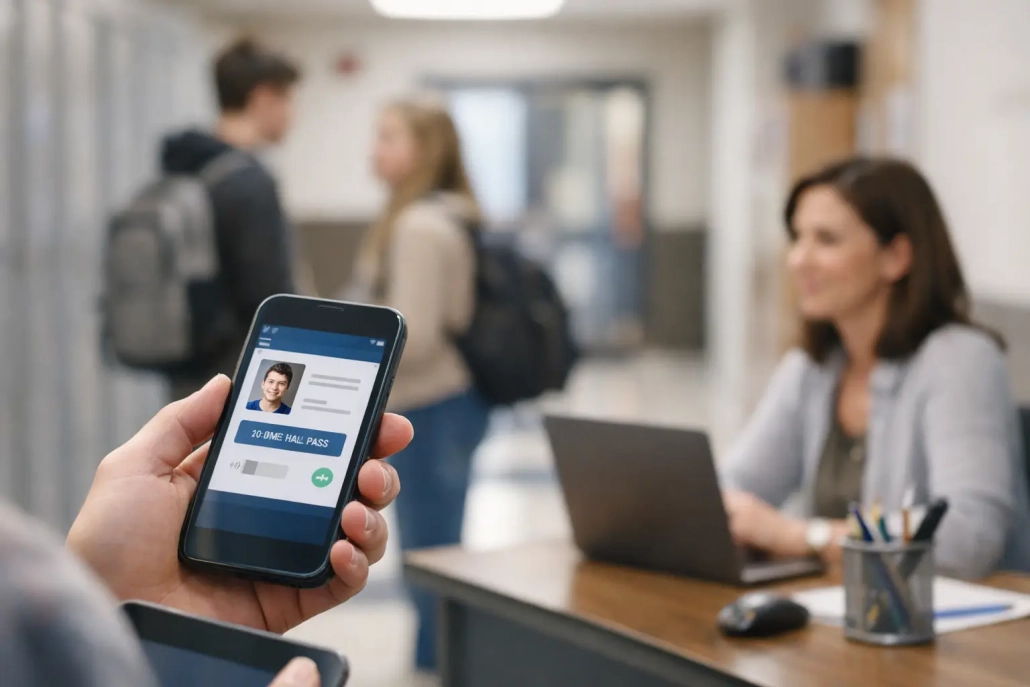
How to Manage Digital Hall Passes Well
A hall pass system usually gets attention only after something goes wrong – too many students out at once, missed class time, weak documentation, or a safety question no one can answer quickly. That is why school leaders keep asking how to manage digital hall passes in a way that actually improves accountability instead of adding another layer of work.
The right answer is not just moving paper passes onto a screen. A digital hall pass process works when it reflects how your building operates, gives staff real-time visibility, and creates reliable records without slowing instruction. For most schools, that means treating hall passes as an operational system, not a standalone app.
What managing digital hall passes really means
Managing digital hall passes is less about issuing passes and more about controlling movement. When a student leaves class, the school should know who is out, where they are going, when they left, how long they have been gone, and whether that movement fits building rules.
That visibility matters for daily discipline, but it also matters for campus accountability. Assistant principals need data when patterns show up. Front office staff need confidence when answering parent questions. Safety teams need accurate location records when a situation escalates. Teachers need a quick process they will actually use between instruction, redirection, and attendance tasks.
A strong system balances three goals at the same time: ease of use for staff, clear limits for students, and reporting for administrators. If one of those pieces is weak, the process usually breaks down.
Start with your school rules before your software
If you want to know how to manage digital hall passes effectively, start by defining movement rules at the building or district level. Technology can enforce expectations, but it should not be expected to create them.
Begin with the basic questions. How many students can leave a classroom at one time? Are there pass limits by destination, grade level, time of day, or period? Should students be blocked from leaving during the first and last ten minutes of class? Are certain student combinations restricted from being out at the same time? What happens when a pass exceeds its expected duration?
These decisions shape whether the system supports order or creates friction. A middle school with frequent restroom misuse may need tighter time windows and stricter concurrency rules. A high school campus with multiple buildings may need more flexibility, but stronger visibility and escalation alerts. An elementary building may use digital hall passes more sparingly, while still valuing the audit trail.
The trade-off is straightforward. Too few rules, and the system becomes a digital version of weak paper control. Too many, and staff start bypassing it because the process feels rigid. The best setups are clear enough to prevent misuse and flexible enough to match daily school life.
Build the process around classrooms, not central office assumptions
One of the fastest ways to lose adoption is designing a process that looks good in a planning meeting but does not fit the pace of instruction. Teachers need to issue or approve a pass quickly. They also need to see whether a student already has a pattern of extended trips or frequent requests.
That is why the workflow matters as much as the policy. A practical digital hall pass system should make it easy to create a pass, choose a destination, apply automatic time limits, and monitor active passes in real time. It should also make overdue passes obvious without requiring teachers to stop teaching and go hunting for information.
For school leaders, this is where implementation succeeds or fails. If the system requires too many clicks, inconsistent approvals, or separate logins disconnected from everyday staff routines, usage drops. If it fits into existing classroom and front office workflows, compliance goes up quickly.
How to manage digital hall passes with real-time visibility
Real-time visibility is where digital passes outperform paper by a wide margin. With paper, no one has a full picture unless they walk the halls or interrupt classrooms. With digital tracking, authorized staff can see active passes, destinations, time out, and exceptions as they happen.
That changes how schools respond. A dean can identify students who are out too long before the issue becomes a discipline referral. Operations teams can spot hotspots by location and time of day. Administrators can prevent common meetups by restricting specific students from receiving passes at the same time. During drills, emergencies, or investigations, staff have a far clearer record of who should be where.
This is also where integration matters. Schools benefit most when hall pass activity is not isolated from attendance, tardies, or accountability workflows. When the same platform supports broader student movement and attendance management, staff spend less time reconciling records and more time acting on them.
Use data to solve patterns, not just document them
A digital hall pass system creates data quickly, but data alone does not improve operations. The value comes from using reports to identify patterns that affect instruction, supervision, and safety.
Look at repeat users, common destinations, average time out by teacher or period, and peak release windows. A school may discover that one restroom area drives a disproportionate number of discipline concerns, or that certain class transitions generate unusual pass volume. Those findings can support schedule adjustments, staffing changes, or targeted interventions.
It also helps to separate isolated behavior from repeat behavior. A single long pass may be nothing. Ten long passes over two weeks usually indicate a pattern worth addressing. Administrators need reporting that makes those trends easy to see without manual spreadsheet work.
For districts, consistency is another major advantage. If each building manages hall movement differently, comparison is difficult and accountability becomes subjective. A district-level framework, with room for site-based customization, makes reporting stronger and expectations clearer.
Staff adoption is the make-or-break factor
Schools do not struggle with digital hall passes because the concept is flawed. They struggle when staff buy-in is weak, training is thin, or enforcement is inconsistent.
Teachers and support staff need to understand what problem the system is solving. If the message is just compliance, adoption feels forced. If the message is fewer interruptions, stronger documentation, faster support from administration, and better student accountability, the value is easier to see.
Training should be short, practical, and role-specific. Teachers need the issuing workflow. Front office teams need visibility and monitoring tools. Administrators need reports, restrictions, and exception handling. Technology teams need setup clarity, user permissions, and SIS alignment. When everyone gets the same generic overview, important gaps remain.
It also helps to launch with a defined support plan. Who answers staff questions? Who can adjust rules? Who reviews usage after the first two weeks? Schools that treat rollout as a one-time event often end up with uneven usage building by building, or even classroom by classroom.
Set expectations with students early
Students usually adjust to digital hall passes quickly, especially when expectations are consistent. Problems tend to come from mixed enforcement, not from the technology itself.
Explain what the system tracks, why the school is using it, and what students should expect when requesting to leave class. Keep the message direct. Hall passes are not disappearing. The school is creating a better way to manage them, reduce misuse, and keep class time protected.
There is also a balance to maintain here. Schools should avoid making the process feel punitive for routine needs. Students still need access to restrooms, nurses, counselors, and support services. The goal is not to block legitimate movement. The goal is to document it accurately and manage it fairly.
Choose flexibility over one-size-fits-all rules
Every campus has different pressure points. A high school with open transitions, athletics traffic, and large student populations needs a different setup than a small private school or a district alternative program. That is why flexibility matters.
The best systems allow schools to set building-specific parameters while maintaining central oversight. You may want district-wide reporting standards, but local control over destinations, time thresholds, approvals, and student restrictions. That combination supports consistency without ignoring operational reality.
This is one reason many K-12 leaders look for all-in-one platforms rather than isolated tools. When attendance, accountability, notifications, and hall movement live in one place, schools gain cleaner records and fewer disconnected processes. For schools trying to reduce manual work and improve response time, that matters.
SwipeK12 Solutions approaches hall pass management from that broader operational lens – not as a single feature, but as part of a complete accountability workflow that schools can actually sustain.
Keep improving after launch
The schools that manage digital hall passes best do not assume the first setup is the final setup. They review usage, listen to staff, and adjust rules based on what the data shows.
Sometimes the fix is tightening limits. Sometimes it is loosening them in places where the process is slowing down classrooms for no real gain. Sometimes it is simply retraining staff on overdue pass monitoring or approval expectations. Good systems improve over time because leaders treat them as living operations, not static policy.
If your current process still relies on paper, hallway guesswork, or scattered records, digital hall passes can make a measurable difference. The key is implementing them with clear expectations, real-time visibility, and enough flexibility to fit how your school actually runs. When that happens, hall pass management stops being a daily frustration and starts becoming part of a safer, more accountable campus.


Leave a Reply
Want to join the discussion?Feel free to contribute!