
Barcode Badges for Student Attendance That Work
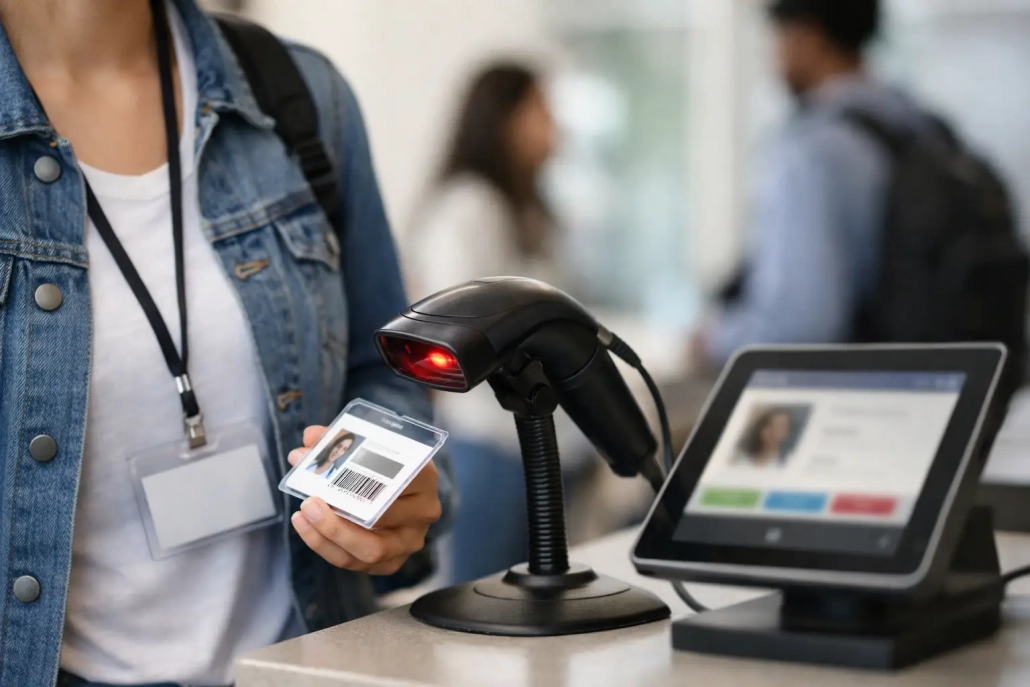
At 7:42 a.m., the front office should not be sorting through late slips, correcting handwritten names, and trying to determine which students actually made it to first period. Barcode badges for student attendance give schools a faster, more dependable way to document arrivals, classroom presence, tardies, and movement throughout the day. A quick scan creates a time-stamped record that staff can use immediately.
For K-12 leaders, the value is not the barcode itself. The value is operational control. When attendance data is captured at the point of entry and shared in real time, schools can respond sooner to absences, identify patterns, support family communication, and reduce the administrative burden on teachers and office teams.
Why barcode badges improve student attendance operations
A barcode badge turns an existing student ID into a practical accountability tool. Students already carry identification for transportation, meals, library access, activities, or campus entry. Adding a scannable barcode allows one badge to support attendance workflows without asking staff to manage another paper process.
The most immediate benefit is speed. A staff member can scan a student at a tardy kiosk, classroom door, bus loading area, counseling office, or event check-in point in seconds. The system records the student, location, date, and time consistently, rather than relying on manual entry after a busy arrival period.
Accuracy improves as well. Handwritten lists can be hard to read, paper slips can be misplaced, and manual entry leaves room for duplicate records or incorrect student selections. A barcode scan ties the attendance event directly to the student record. That creates cleaner data for attendance clerks, administrators, and district reporting teams.
Just as useful, barcode-based workflows reduce interruption in classrooms. Teachers should be focused on instruction, not managing a line of late students or stopping class to correct attendance changes. A designated scan station or mobile scanning process can document arrivals while keeping the instructional day moving.
What a barcode attendance workflow should capture
Not every school needs the same attendance process. An elementary school may prioritize classroom roll-taking and parent pickup accountability, while a high school may need stronger tardy controls, hall monitoring, and event attendance. The best configuration reflects the building’s actual routines.
At a minimum, a barcode attendance system should capture the student’s identity, scan time, location, and attendance status. It should also distinguish between arrivals that are on time, tardy, excused, or unauthorized based on the rules the school sets.
Arrival and tardy management
For many schools, the front entrance is where barcode badges deliver the quickest operational gain. Students scan upon arrival, and the system applies the appropriate status according to the bell schedule. A student arriving after the tardy threshold can receive a printed pass, a digital record, or a referral workflow based on campus policy.
This reduces the familiar morning bottleneck: students waiting for office staff, staff manually entering names, and teachers receiving students without knowing whether they have been checked in. The record exists when the scan occurs, not twenty minutes later.
Classroom attendance and corrections
Barcode badges can also support classroom attendance, particularly when schools need a second point of verification or want to simplify attendance corrections. Teachers may scan a class roster, use a mobile device, or review an automatically populated record and make only the necessary changes.
There is a trade-off here. Scanning every student in every class may not be the best use of instructional time in a building with stable rosters and traditional daily attendance. In those environments, barcode scanning is often most effective at arrivals, tardies, alternative programs, testing, and high-traffic locations. For campuses where class attendance is difficult to verify, however, classroom scans can add meaningful accountability.
Student movement and campus accountability
Attendance is only one part of knowing who is on campus. Schools also need visibility when students report to a nurse, counselor, behavior support room, tutoring session, lunch detention, or approved off-campus program.
A barcode scan can document those movements without relying on a paper sign-out sheet. When paired with hall pass management and real-time alerts, staff have a clearer picture of whether a student is in class, on an approved pass, checked out, or somewhere they should not be. This is especially valuable during emergencies, drills, and parent inquiries.
The difference between a badge and a complete system
A printed barcode alone does not solve attendance problems. Schools need the software, hardware, processes, and support behind the badge to make the data useful.
The system should work with the student information system so student names, IDs, schedules, enrollment changes, and attendance codes stay aligned. Without integration, staff can end up reconciling separate databases, which creates the same manual work the badges were meant to eliminate.
Real-time reporting matters too. An attendance clerk should be able to see unexcused absences, late arrivals, repeat tardy patterns, and exceptions without waiting for a batch upload. Principals need building-level visibility. District leaders need reporting that can scale across schools while still allowing each campus to follow its own procedures.
SwipeK12 Solutions approaches this need as an all-in-one accountability workflow, connecting barcode capture with attendance, tardy management, notifications, student movement tools, and SIS-integrated reporting. The goal is simple: make the scan useful to the person who needs to act on it.
Choosing hardware that fits the school day
The right scanner depends on where and how staff will use it. A fixed scanner at a high school tardy station may be ideal for processing a large volume of students quickly. A mobile device with a scanning app can be more practical for administrators monitoring hallways, extracurricular events, field trips, or multiple entry points.
Reliability should come before novelty. Schools should consider scan speed, barcode durability, connectivity requirements, battery life for mobile tools, and whether a device can read badges through a protective sleeve. If students wear badges on lanyards, the scan process should work without repeated repositioning or staff assistance.
Badge design deserves attention as well. The barcode must print clearly and remain readable after daily use. It should be placed where a scanner can reach it easily, while the badge still includes the photo, name, grade level, school branding, and other information the campus requires. Schools that use badge printers should establish a quick replacement process for lost or damaged IDs.
Set clear rules before launch
Technology can enforce a process, but it cannot define one for the school. Before deployment, leadership should decide what happens when a student forgets a badge, arrives late, scans at the wrong location, or attempts to scan for another student.
Staff also need a shared understanding of who owns each step. Front office teams may manage late arrivals. Teachers may verify classroom exceptions. Deans may review repeated tardies. Attendance staff may process excuses and family communication. When those responsibilities are unclear, even strong data can sit without follow-up.
A short pilot is often the best starting point. One entrance, one grade level, or one tardy process can reveal practical issues before a district-wide rollout. Schools can test student flow, scanner placement, network coverage, reporting needs, and staff training in the setting where the process will actually operate.
Privacy, equity, and practical exceptions
Student attendance records require careful handling. Access should be role-based so staff see the information needed for their responsibilities, not more. Districts should also establish retention practices, verify vendor data protections, and train employees on appropriate use of student information.
Equity matters in badge policies. Students lose badges, transfer midyear, arrive by different transportation methods, or face circumstances that make a standard entry routine difficult. A strong system provides an exception process that is fast and respectful. It should not turn a missing badge into an unnecessary barrier to instruction.
Schools should also avoid treating a scan as the only truth. A barcode record is powerful evidence of a check-in, but staff judgment remains necessary when technology fails, schedules change, or a student has an approved accommodation. The best processes combine automated records with clear human review.
Measuring whether the system is working
Success should be measured in operational outcomes, not just the number of badges issued. Schools can track the time required to process tardy students, the volume of attendance corrections, the percentage of records completed by a target time, and the speed of family notifications.
Leaders should also look for behavioral patterns. Are repeat tardies declining after students receive timely consequences and families receive prompt updates? Are staff spending less time on manual reconciliation? Can administrators identify students who need attendance intervention earlier? Those are the results that make barcode attendance worthwhile.
A barcode badge is a small piece of plastic or cardstock. Used well, it becomes a dependable signal that helps schools account for students, protect instructional time, and act on attendance information while it can still make a difference.


Leave a Reply
Want to join the discussion?Feel free to contribute!