
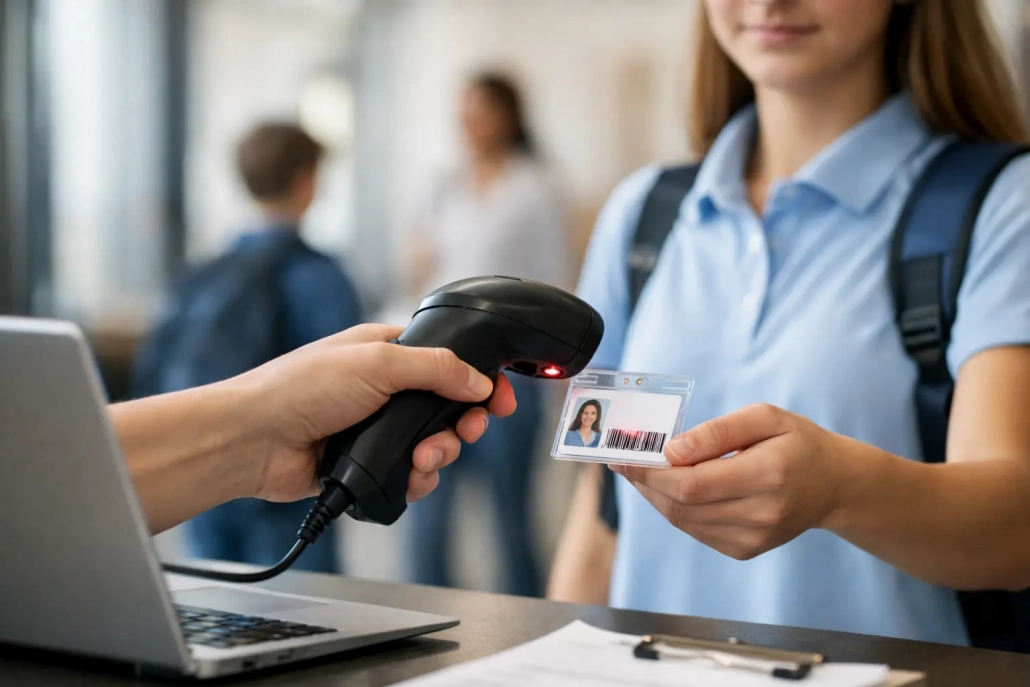
How a School Barcode Scanning System Helps
The front office already knows the pattern. First bell rings, a line forms, late students shuffle in, paper slips pile up, and someone has to sort out who arrived, when they arrived, and whether a parent needs a notification. A school barcode scanning system changes that routine fast. Instead of chasing paper, school teams can capture attendance and student movement in real time, with cleaner data and fewer gaps.
For K-12 schools, this is not just about speed at the check-in desk. It is about accountability across the full school day. When attendance, tardies, class scans, cafeteria movement, hall traffic, and dismissal events all live in one workflow, administrators gain a much clearer view of who is on campus and where intervention is needed.
What a school barcode scanning system actually does
At its core, a school barcode scanning system uses a student ID card or printed barcode to record an event instantly. That event might be a morning arrival, a tardy check-in, a classroom attendance scan, a nurse visit, a hall pass return, or a cafeteria entry. Each scan creates a time-stamped record that can be used for reporting, parent communication, compliance, and day-to-day follow-up.
That sounds simple, and it is. The value comes from what happens next. The system can automatically apply attendance rules, update status codes, notify staff, trigger family messages, and push records into the student information system. Instead of separate processes handled by different departments, schools get one operating model for student tracking.
This matters most in environments where manual attendance still creates friction. A paper sign-in sheet may work for a small office on a quiet day. It breaks down during high-volume arrival periods, testing schedules, early releases, substitute coverage, or district audits. Barcode scanning reduces that friction because staff do not need to rekey names, interpret handwriting, or fix errors later.
Why schools are replacing manual processes
Most schools do not set out to build inefficient attendance workflows. They usually inherit them. A bell schedule changes, a new intervention process is added, district reporting gets stricter, and over time the front office ends up managing a patchwork of spreadsheets, handwritten slips, and disconnected software.
A barcode-based process addresses several operational problems at once. First, it increases accuracy. If a student scans an ID, the office captures the correct identity and time without relying on verbal check-ins or handwritten logs. Second, it improves speed. One scan is faster than searching a roster, marking a form, and passing information to another staff member. Third, it creates visibility. Administrators can review trends by student, grade level, period, campus, or district without waiting for someone to compile records by hand.
There is also a school culture benefit. When tardy handling is consistent, students and families quickly understand that arrivals are being tracked in real time. That consistency supports better behavior and stronger accountability. Schools often see the biggest gains not from the hardware itself, but from the fact that expectations become clear and enforceable.
Where a school barcode scanning system has the biggest impact
The most obvious use case is tardy and attendance capture, but that is only one part of the day. Schools that get the strongest results usually apply barcode scanning across multiple checkpoints.
Front office check-ins
Morning arrivals and late check-ins are where many schools feel immediate relief. Office staff can scan students in within seconds, issue a pass if needed, and keep the line moving. Records are cleaner, parents can be notified faster, and administrators no longer need to reconcile stacks of paper at the end of the day.
Classroom attendance
Teachers benefit when attendance entry is quick and reliable. A classroom scan can reduce the lag between the start of class and the moment attendance is posted. That matters when schools are trying to identify absent students early, manage interventions, or maintain audit-ready records.
Hall pass and movement tracking
Schools focused on campus accountability often extend scanning beyond attendance. If a student leaves class for an approved reason, a scan can document departure and return times. That gives deans, assistant principals, and safety teams better insight into student movement without adding extra paperwork.
Cafeteria, wellness, and special programs
Some schools use barcode scanning to track meal service, tutoring participation, screenings, or support services. The right setup depends on campus goals, but the advantage is the same: one student identifier can support multiple operational needs across the building.
What decision-makers should look for
Not every system marketed to schools is built for real K-12 conditions. A product may scan a barcode, but that does not mean it supports daily school operations well. Decision-makers should look past the scanner itself and focus on workflow, integration, and support.
The first priority is ease of use. If office staff, teachers, substitutes, and support personnel cannot use the system with minimal training, adoption will stall. The interface should be clear, the scanning process should be fast, and common exceptions should be easy to manage.
The second priority is real-time integration. Attendance and student movement data become much more useful when they sync with the SIS and reporting workflows schools already depend on. Without that connection, staff may still be forced to maintain duplicate records, which defeats the purpose.
The third priority is flexibility. A single campus may need one configuration, while a district may need different rule sets by school type, grade band, or bell schedule. A good school barcode scanning system should support both simple and advanced deployments without forcing every building into the same model.
The fourth priority is responsiveness from the vendor. Schools do not have time for slow support during morning arrival, schedule rollover, or the first week of school. Implementation and ongoing service matter just as much as the software features.
The trade-offs schools should plan for
Barcode scanning is highly effective, but it is not magic. Like any school operations tool, outcomes depend on implementation discipline.
A school that scans at the front office but allows classrooms to manage attendance loosely may still have reporting gaps. A district that buys hardware without defining tardy rules, notification protocols, and staff responsibilities may not see the consistency it expected. The system works best when policy and practice are aligned.
There is also a hardware conversation to get right. Some schools prefer fixed stations in the office. Others need mobile devices for hall sweeps, events, or classroom attendance. In many cases, a mixed setup makes the most sense. The best choice depends on building layout, staffing patterns, and how many checkpoints the school wants to cover.
Student ID management matters too. If cards are frequently lost, damaged, or not carried consistently, schools should plan for fast replacement workflows or backup lookup options. Technology can remove a lot of manual work, but it still needs practical procedures around it.
Why this matters for attendance, safety, and parent communication
Schools are under pressure to improve attendance and document student presence more accurately than ever. Chronic absenteeism, tardiness, and unverified movement all create operational and compliance challenges. A school barcode scanning system gives schools faster access to the data they need to act, not just report.
That is especially important when communication is part of the workflow. If a family can receive a prompt notification that a student checked in late, schools reduce confusion and strengthen trust. If administrators can pull clean records for interventions or audits, they save time and avoid scrambling for documentation.
From a safety standpoint, real-time student accountability has become a baseline expectation. During drills, emergencies, or routine investigations, schools need to know who was present, where a student checked in, and when that event occurred. Barcode scanning helps create that record without adding another layer of work for already stretched teams.
For districts looking at scale, the benefit is consistency. A unified platform can help standardize attendance capture, tardy handling, and campus monitoring across multiple buildings while still allowing each school to operate within its own schedule and procedures. That balance matters. Standardization without flexibility creates resistance. Flexibility without oversight creates gaps.
An all-in-one approach is often where schools see the best long-term return. When attendance, accountability, notifications, and student tracking are managed together, the system supports daily operations instead of becoming just another tool staff have to remember to use. That is where platforms like SwipeK12 stand out – not only in barcode capture, but in connecting that event to the full operational picture.
The real question is not whether schools can scan a student ID. It is whether they want attendance and campus accountability to stay reactive, manual, and fragmented. For schools that want cleaner data, faster intervention, and better visibility throughout the day, the right system gives staff more control and students fewer chances to slip through the cracks. Swipe Works when the process fits the school, the data moves in real time, and the people using it can trust it from first bell to dismissal.


Leave a Reply
Want to join the discussion?Feel free to contribute!