
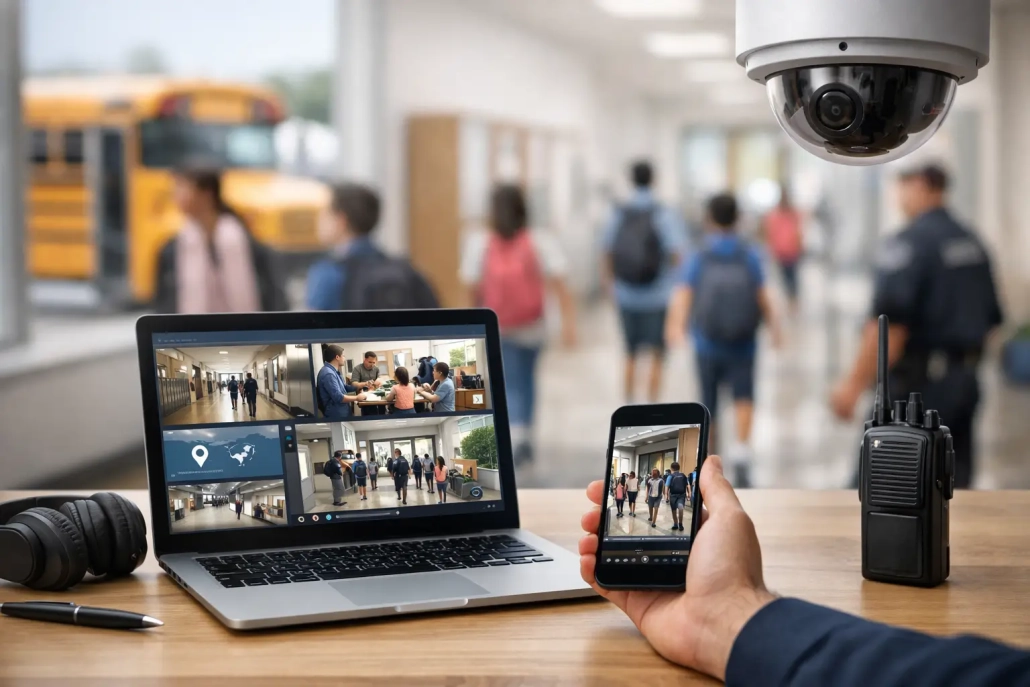
Best K-12 Campus Monitoring Platforms for Schools
A student arrives late through a side entrance. Another leaves class with a hall pass. A visitor checks in at the front office. At the same time, an attendance clerk is correcting exceptions before the district cutoff. These are not separate operational problems. They are daily campus-accountability events, and the best K-12 campus monitoring platforms help schools manage them from a connected, real-time view.
For school leaders, the right platform is not simply a safety purchase or an attendance tool. It is an operational system that answers practical questions quickly: Who is on campus? Who is missing from class? Where should staff focus intervention? Were families notified? Is the data ready for the SIS and required reporting?
What Makes a Campus Monitoring Platform Best-in-Class?
The best platform depends on a school’s entry procedures, staffing model, student population, and current technology. A small private school may need fast barcode attendance and visitor tracking. A large district may need a system that supports multiple bell schedules, district-wide reporting, mobile workflows, automated notifications, and consistent SIS data across dozens of campuses.
Still, the strongest K-12 campus monitoring platforms share one quality: they turn routine activity into useful accountability without adding friction for teachers, students, or office staff. If a system takes too long to use during first period, requires duplicate data entry, or leaves staff working from yesterday’s records, adoption will suffer regardless of how impressive the feature list looks.
A best-in-class solution should capture attendance and movement data at the point of activity, update the right people in real time, and provide administrators with actionable records. It should also fit the school day as it is actually run – including late buses, testing schedules, substitute teachers, cafeteria lines, early dismissals, and students who need support rather than another manual process.
The Core Capabilities to Evaluate
Real-time attendance capture
Attendance remains the foundation of campus visibility. Look for platforms that allow schools to record attendance through barcode scanning, classroom devices, mobile check-ins, kiosks, or staff-managed workflows. Multiple capture methods matter because no two parts of a campus operate exactly alike.
The system should clearly distinguish between present, tardy, absent, early dismissal, and other locally defined codes. It should also make corrections traceable. Attendance teams need an audit-ready record of what changed, when it changed, and which staff member made the update.
Real-time capture has a direct operational benefit. It gives attendance officers and administrators a current list of students who have not arrived, rather than forcing them to wait for paper rosters or end-of-period submissions. That speed supports family outreach, truancy procedures, and student safety protocols.
Student movement and hall pass management
A campus can have accurate homeroom attendance and still lack visibility during the school day. Hall pass management fills that gap by documenting when students leave class, where they are expected to go, and whether they have returned.
The best systems make this simple for teachers. A pass should take seconds to issue, not become another task that interrupts instruction. Administrators and deans should be able to identify patterns, such as repeated hallway activity, prolonged trips, or students leaving the same class at the same time.
This data should support reasonable supervision, not create a punitive culture. Schools need the flexibility to account for nurse visits, student services, accommodations, restroom access, and individual intervention plans. Configurable rules are more valuable than a one-size-fits-all workflow.
Visitor and entry monitoring
Front-office monitoring is a critical part of campus accountability. A platform should record visitor arrivals and departures, identify the purpose of each visit, and help staff maintain a clear view of who is authorized to be on campus.
For many schools, visitor monitoring works best when it connects to the same operational environment as attendance and student tracking. Separate systems can create blind spots, especially during high-volume events, conferences, or emergency situations. A connected record gives office teams, administrators, and safety personnel a more complete picture.
Schools should also consider how the platform handles badge printing, sign-out procedures, alerts, and historical reporting. The goal is not to make the front office feel impersonal. It is to give staff a dependable process they can follow consistently, even during a busy morning rush.
Family notifications and intervention workflows
Data has limited value if it sits in a dashboard waiting for someone to notice it. Strong platforms help schools act on attendance and tardy events through automated or staff-triggered family communication.
The right workflow varies by district policy. Some schools need immediate notices when a student is marked absent. Others prefer a verification window before messages are sent. The platform should support those local decisions, including language preferences, message timing, attendance thresholds, and escalation steps.
A useful system also helps staff document outreach and intervention. When principals, counselors, attendance teams, and support staff can see the same history, they can respond more consistently. This is especially valuable for chronic absenteeism work, where a pattern across weeks matters more than a single event.
SIS integration and reporting
A platform that creates another disconnected database can increase the burden on office and IT teams. SIS integration should be a major evaluation factor, not an afterthought.
Ask how student records, enrollment changes, schedules, attendance codes, guardian contacts, and reporting data move between systems. Clarify whether information transfers in real time, on a schedule, or through manual exports. Each approach can work, but the trade-off should be understood before implementation.
District leaders should also examine reporting depth. Schools need more than a daily absence total. They may need tardy trends by grade level, attendance patterns by period, campus comparisons, intervention histories, student-level exception reports, and records that support compliance requirements. The best reporting tools make these answers accessible without requiring an analyst to build a report every time.
How to Compare the Best K-12 Campus Monitoring Platforms
When evaluating vendors, start with the school day rather than a feature checklist. Map the moments when accountability can break down: arrival, homeroom, class transitions, lunch, restroom and office passes, dismissal, visitors, and after-school activities. Then ask each vendor to demonstrate those specific workflows.
A live demonstration should show what teachers see, what attendance staff see, and what a principal sees when action is required. A platform may look polished from an administrator dashboard while placing too many steps on the people expected to use it every period. Adoption depends on that frontline experience.
Implementation should receive the same scrutiny as the software. Ask who configures attendance codes, schedules, locations, user permissions, parent notifications, and SIS connections. Determine what training is available for teachers, substitutes, office staff, and district administrators. Strong support is not an extra. It is part of whether a system will produce reliable data after launch.
Finally, assess scalability honestly. A platform that works well for one building may not handle district variation without extensive workarounds. On the other hand, a large enterprise system can be excessive for a school that needs a focused, easy-to-manage solution. The best fit is the one that meets current needs while allowing the school to add capabilities as operations mature.
An All-in-One Approach Reduces Operational Gaps
Schools often accumulate separate tools for attendance, tardies, visitor logs, hall passes, parent messaging, and reporting. Each tool may solve one problem, but the handoffs between them create additional work and incomplete records.
An all-in-one approach can reduce those gaps by keeping attendance, student movement, notifications, and campus monitoring in a shared operational system. For example, SwipeK12 Solutions supports barcode-based attendance, mobile check-ins, hall pass management, visitor monitoring, and SIS-connected reporting workflows designed around the realities of K-12 operations.
That approach is especially valuable when staff need immediate context. If a student is late, a dean should not need to search multiple programs to understand whether the student checked in, arrived from a bus delay, has a current pass, or has a recurring attendance concern. Connected workflows help schools move from isolated events to informed action.
Questions Your Team Should Ask Before Selecting a Platform
Before making a decision, involve the people who handle the daily work: attendance clerks, front-office staff, teachers, deans, counselors, safety personnel, and IT leaders. Their priorities will differ, and that is useful. The right platform must serve the full operation, not only the purchasing committee.
Ask whether the system can match your attendance policy without forcing unnecessary changes. Ask how quickly a staff member can scan or check in a student. Ask what happens when Wi-Fi is limited, a device is unavailable, or a substitute is covering a classroom. Ask how permissions protect student information while still giving staff the access they need.
Also ask for a clear support model. Schools need responsive answers during the first week of school, during state reporting periods, and when a bell schedule changes with little notice. A vendor should be prepared to explain implementation ownership, training options, response expectations, and how configuration requests are handled.
The platform you choose should make accountability easier to practice every day. When teachers can record attendance quickly, administrators can see exceptions as they happen, and families receive timely communication, the school gains more than better records. It gains more time and clarity to keep students present, supported, and connected to learning.


Leave a Reply
Want to join the discussion?Feel free to contribute!