
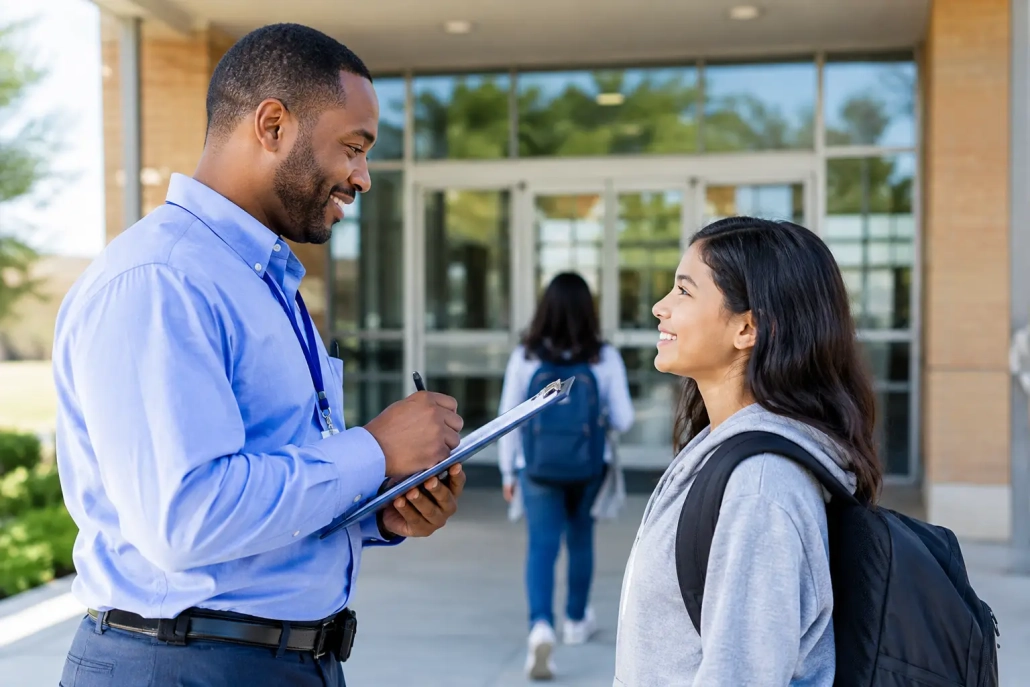
School Safety Starts With Daily Accountability
The first minutes of the school day often determine how manageable the rest of the day will be. If students arrive late through multiple entrances, attendance is still being collected on paper, and staff cannot quickly confirm who is on campus, small gaps can become operational problems. School safety begins with a reliable answer to a basic question: who is here, where are they expected to be, and who needs attention?
For district leaders, this is not simply a security question. It is an accountability question that affects attendance, family communication, emergency preparedness, instruction, and staff workload. The strongest safety practices are built into daily routines, not reserved for emergency drills or major incidents.
School Safety Is an Operational Discipline
A safe campus does not depend on one device, one policy, or one person at the front desk. It depends on connected routines that give staff accurate information at the time they need it. Arrival, classroom attendance, visitor entry, hallway movement, early dismissal, cafeteria access, and departure all create moments when student accountability can either strengthen or weaken.
When those workflows are disconnected, leaders spend too much time chasing information. An attendance clerk may be reconciling tardy slips while an assistant principal is trying to determine whether a student who left class has checked in elsewhere. During an emergency, staff may need to compare paper lists, call classrooms, or rely on outdated reports. None of those tasks should require guesswork.
The goal is not to turn a school into a surveillance environment. Schools need systems that support learning and relationships while providing a clear, current picture of campus activity. That balance matters. Overly complicated procedures can frustrate teachers and slow instruction, while loose procedures leave staff without the information needed to act confidently.
Start With Accurate Arrival and Attendance Data
Daily attendance is one of the most valuable operational signals a school has. It tells staff who made it to campus, who arrived late, who may need outreach, and whether patterns are developing before they become larger concerns. Yet attendance is often treated as a compliance task rather than a real-time safety tool.
A strong process captures attendance close to the point of entry or instruction. Barcode-based scanning, mobile check-ins, and classroom scanning can record student presence quickly without forcing teachers to manage stacks of passes or manually enter data after the fact. The faster information enters the system, the more useful it becomes.
Accuracy also depends on clearly handling exceptions. Late arrivals, students returning from appointments, transfers between classes, and early dismissals all need defined workflows. If a student is marked absent in the student information system but has arrived through a side entrance, staff need a simple way to correct that record immediately. Delayed corrections create confusion for attendance teams and unnecessary concern for families.
For larger districts, SIS integration is especially important. Data should not have to be re-entered across separate systems to produce reliable records. A connected workflow reduces duplicate work, supports compliance reporting, and helps district teams see trends across schools without waiting for end-of-day reconciliation.
Tardiness Is More Than a Discipline Metric
Tardiness affects instructional time, but it can also reveal operational friction. A cluster of late arrivals may point to transportation delays, a bottleneck at a screening station, unclear entry procedures, or students avoiding a particular class. When data is visible in real time, staff can address the cause rather than repeatedly reacting to the symptom.
That does not mean every late student requires a punitive response. Context matters. Effective schools distinguish between a student dealing with a bus issue, a student returning from a counselor meeting, and a pattern that requires intervention. Reliable data gives deans, attendance officers, and administrators the context to respond fairly.
Know Student Movement Without Interrupting Learning
Once the first bell rings, school safety depends on maintaining appropriate visibility of student movement. Hall passes, nurse visits, restroom breaks, office referrals, and pull-outs are normal parts of a school day. The challenge is making those movements accountable without making every teacher manage another time-consuming process.
Digital hall pass management creates a documented record of when a student leaves, where the student is expected to go, and whether the student has returned. For teachers, the best process is fast enough to use during instruction. For administrators, it provides a practical way to identify students who are repeatedly out of class or locations where pass activity is creating concerns.
The value is not in collecting more data for its own sake. The value is in making exceptions visible. If a student has been out of class longer than expected, staff can check the record before launching a broader search. If two students should not be in the hallway together, a system can help staff enforce that restriction consistently. If a student needs support, the movement history may show a pattern worth discussing with the student and family.
Build a Single View of Campus Accountability
Fragmented tools create fragmented awareness. A visitor log at the front office, a spreadsheet for tardies, paper passes in classrooms, and separate attendance reports may each serve a purpose, but they do not give leaders a complete operational picture.
An all-in-one approach connects the moments that matter. Front-office staff can verify a visitor. Teachers can confirm classroom attendance. Administrators can review tardies and student movement. Safety teams can access current accountability information when an incident occurs. Each role sees the information relevant to its work without requiring everyone to navigate the same complex screen.
This approach also makes handoffs more reliable. Consider early dismissal. The office needs to verify the authorized adult, document the departure, update the student record, and ensure the classroom is informed. If that process relies on phone calls and handwritten notes, errors are more likely. A standardized digital workflow gives staff a clear sequence and a time-stamped record.
Make Family Communication Timely and Specific
Families are essential partners in school safety and attendance. They need timely information when a student is absent, arrives late, or leaves campus under an approved process. Delayed messages create anxiety and increase call volume for front-office teams.
Automated notifications can support faster communication, but the message design matters. Alerts should be accurate, understandable, and tied to a confirmed event. Sending a generic absence notification before attendance has been fully reconciled can create confusion. Sending a precise notice when a student has a recorded tardy or unverified absence gives families a useful opportunity to respond.
Schools should also consider language access, contact preferences, and escalation paths. Automation works best when it supports staff judgment, not when it replaces it. A family facing transportation instability or housing disruption may need outreach from a counselor or attendance team, not just another automated message.
Prepare for Emergencies With Current Information
During an emergency, speed matters, but current information matters just as much. Staff need to know which students are assigned to a class, who has checked in late, who is with a specialist, and which visitors are on site. A roster printed in the morning may not reflect what happened after first period.
Real-time accountability tools can support emergency procedures by giving authorized staff access to current attendance and movement data. That does not eliminate the need for drills, radios, staff training, or clearly defined incident-command procedures. Technology is most effective when the people using it understand the process and practice it regularly.
Districts should test their workflows in realistic conditions. Can staff account for students if the network is limited? Who has permission to access reports? How are substitute teachers included? What happens when a student arrives after a drill begins? The answers will differ by campus, but the questions should be part of every safety review.
Choose Technology That Staff Will Actually Use
The most sophisticated platform cannot improve school safety if it adds friction to the day. Teachers need fast workflows. Attendance teams need exception handling. IT departments need secure access, integrations, and dependable support. District leaders need reporting that can scale from one building to thousands of students.
Before selecting a solution, schools should map their current process from arrival to dismissal. Identify where information is delayed, duplicated, or missing. Then prioritize the workflows with the greatest operational impact. A small school may begin with barcode attendance and tardy management. A large district may need mobile check-ins, visitor monitoring, hall passes, automated family notifications, and district-wide reporting from the start.
Implementation should also include training by role. The front office, teachers, deans, safety staff, and district administrators do not use the same features in the same way. Clear training, responsive support, and a phased rollout can make adoption far more successful than a rushed launch. SwipeK12 Solutions is built around this practical reality: accountability tools must fit the pace of a real school day.
Measure What Is Improving
School safety initiatives deserve measurable outcomes. Schools can track attendance capture time, tardy rates, unverified absences, pass duration, notification delivery, and the time required to reconcile records. These metrics help leaders see whether a process is reducing administrative friction or merely shifting it somewhere else.
Numbers should lead to conversations, not automatic assumptions. A drop in tardies may reflect better arrival procedures. A rise in hall pass activity may signal a scheduling issue, a student support need, or inconsistent classroom expectations. Reviewing data with school teams helps leaders connect operational patterns to practical action.
The most effective safety culture is visible in ordinary moments: a student is checked in correctly, a teacher can account for every learner, a family receives a timely update, and an administrator can resolve an exception before it grows. When those moments are handled well every day, schools are better prepared for the moments that demand more.


Leave a Reply
Want to join the discussion?Feel free to contribute!